Breathe Into Stillness: How Qi Gong Quietly Transformed My Daily Energy
Living with constant low-level stress used to be my normal—until I stumbled upon qi gong. It wasn’t dramatic or fast, but over weeks, I noticed subtle shifts: calmer mornings, fewer energy crashes, and a deeper connection to my body. This isn’t about miracle cures, but real, grounded changes from integrating ancient movement and breath. If you're seeking a natural way to rebalance, this journey might resonate with you. For many women in their thirties to fifties, life is a continuous loop of responsibilities—managing homes, supporting families, meeting work demands—all while quietly setting personal needs aside. The idea of adding another 'should' to the list can feel exhausting. Yet what if the most powerful change didn’t require more effort, but a gentle reorientation toward stillness, breath, and presence? That’s where qi gong begins.
The Hidden Cost of Modern Hustle
Every morning begins the same: an alarm blares, eyes snap open, and the mind immediately races through the day’s checklist. Coffee is poured, children are dressed, emails are scanned before breakfast, and within minutes, the nervous system is already in overdrive. This rhythm is familiar to millions of women who structure their days around the needs of others. The modern lifestyle glorifies productivity, but beneath the surface of accomplishment lies a quiet erosion of energy, focus, and emotional resilience. Chronic stress isn’t always loud—it often hums in the background as fatigue, irritability, or a sense of being perpetually drained.
The body was not designed for constant activation. When stress becomes a default state, the sympathetic nervous system remains engaged, flooding the body with cortisol and adrenaline. Over time, this leads to diminished immune function, disrupted sleep, and a growing sense of disconnection from one’s own physical signals. Many women report feeling 'wired but tired'—awake from obligation, yet emotionally and physically depleted. The irony is that in striving to do more, we often lose access to our deepest reserves of strength. Wellness is frequently reduced to quick fixes: diet plans, intense workouts, or sleep supplements. But what’s often missing is attention to the subtle, sustaining force within—the breath, the rhythm of movement, the quiet awareness that allows energy to flow.
Qi gong addresses this gap not by adding more, but by restoring balance. It operates on the principle that energy—what traditional Chinese medicine calls *qi*—flows through the body along pathways known as meridians. When this flow is disrupted by tension, poor posture, or shallow breathing, vitality diminishes. The modern lifestyle, with its long hours of sitting, screen exposure, and emotional labor, creates conditions where energy stagnates. The result is not just physical discomfort, but a sense of being out of sync with oneself. Reclaiming energetic balance isn’t about achieving perfection; it’s about returning to a natural state of flow, where rest and activity coexist in harmony.
What Exactly Is Qi Gong? (And What It’s Not)
Qi gong (pronounced “chee-gong”) is a centuries-old practice rooted in Chinese philosophy and traditional medicine. The word itself combines *qi*, meaning vital energy or life force, and *gong*, meaning cultivation or skill developed through practice. Together, qi gong translates to “energy work” or “practice of cultivating life energy.” At its core, it is a system of coordinated body posture, movement, breathing, and focused intention. Unlike high-intensity exercise, qi gong emphasizes slowness, fluidity, and internal awareness. Movements are gentle, often repetitive, and designed to awaken sensitivity to the body’s subtle signals.
It’s important to clarify what qi gong is not. It is not a mystical ritual or a promise of supernatural abilities. It does not require belief in any particular philosophy or religion. While it shares roots with practices like tai chi and martial arts, qi gong stands on its own as a practical tool for health and well-being. It is not about achieving dramatic physical feats or mastering complex forms overnight. Instead, it invites practitioners to slow down, tune in, and cultivate a daily rhythm of care. There is no need for special equipment, expensive clothing, or a large space—just a few minutes and a willingness to be present.
Historically, qi gong was used by healers, monks, and martial artists to strengthen the body, sharpen the mind, and support longevity. Today, it is increasingly recognized in integrative health circles for its ability to reduce stress, improve balance, and enhance overall vitality. Clinical studies have shown that regular practice can lower blood pressure, improve immune response, and reduce symptoms of anxiety and depression. What makes qi gong unique is its holistic approach—it treats the person as a whole, not just a collection of isolated symptoms. By aligning breath, movement, and attention, it creates conditions for the body to self-regulate and restore.
Why Your Body Actually Craves Slow Movement
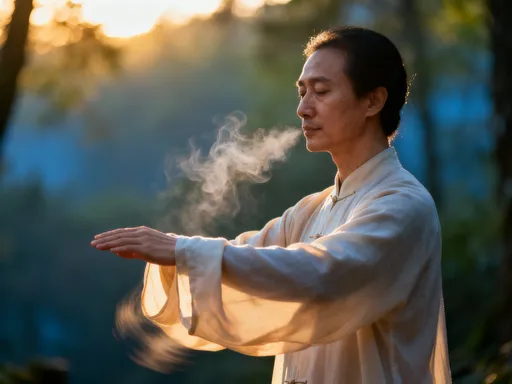
In a culture that equates speed with success, the idea of moving slowly can feel counterintuitive, even wasteful. Yet the body thrives on rhythm, not rush. Slow, intentional movement is not passive—it is an active form of restoration. When we move deliberately, we engage the parasympathetic nervous system, the branch responsible for rest, digestion, and repair. This is the opposite of the fight-or-flight response that dominates modern life. Qi gong’s gentle motions—such as lifting the arms like floating clouds or rotating the waist with mindful precision—send signals to the brain that it is safe to relax.
From a physiological standpoint, slow movement improves circulation. As muscles contract and release in a controlled manner, blood flow increases, delivering oxygen and nutrients to tissues while removing metabolic waste. This process supports joint health, reduces inflammation, and eases muscular tension. For women who spend hours at desks or in caregiving roles, this can mean relief from chronic stiffness in the neck, shoulders, and lower back. Unlike high-impact exercise, which can strain aging joints, qi gong strengthens the body without wear and tear. It enhances proprioception—the body’s ability to sense its position in space—leading to better balance and coordination, which becomes increasingly important with age.
Another benefit is the improvement in mitochondrial function. Mitochondria are the energy-producing structures within cells, and their efficiency declines under chronic stress. Slow, rhythmic movement paired with deep breathing has been shown to support mitochondrial health, leading to more sustainable energy levels throughout the day. Many women report that after several weeks of practice, they experience fewer afternoon crashes and feel more grounded in their bodies. This is not due to increased caffeine or sugar intake, but to a deeper alignment between physical effort and recovery. In this way, qi gong redefines productivity—not as doing more, but as being more present in each moment.
The Breath-Body Connection You’re Probably Missing
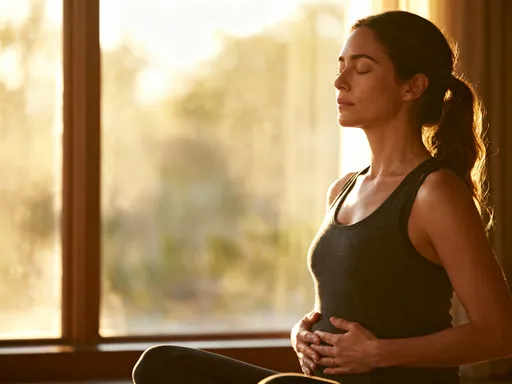
Breathing is automatic, yet most adults have forgotten how to do it well. In times of stress, breathing becomes shallow, rapid, and confined to the upper chest. This pattern limits oxygen intake and reinforces the stress response, creating a feedback loop that keeps the body in survival mode. Qi gong places breath at the center of practice, teaching a method known as diaphragmatic or abdominal breathing. This involves drawing air deep into the belly, allowing the diaphragm to descend fully, which massages internal organs and stimulates the vagus nerve—the primary pathway of the parasympathetic nervous system.
When we breathe deeply, the body receives a clear signal: you are safe. This simple act can lower heart rate, reduce blood pressure, and calm the mind within minutes. In qi gong, breath is not just a function—it is a bridge between the conscious and unconscious, the physical and the emotional. Practitioners are taught to synchronize breath with movement, such as inhaling as the arms rise and exhaling as they lower. This coordination creates a meditative rhythm that quiets mental chatter and enhances focus. Over time, this awareness spills into daily life. A woman may notice she is holding her breath while checking email or clenching her jaw during a phone call—and with that awareness, she can choose to pause and reset.
Think of the breath as the operating system of the body. Just as a computer runs more smoothly after an update, the body functions better when breathing is optimized. Unlike quick fixes like energy drinks or naps, diaphragmatic breathing provides a sustainable source of vitality. It requires no cost, no equipment, and only a few conscious breaths to initiate. For women juggling multiple roles, this is a powerful tool: the ability to recalibrate in real time, whether standing in the kitchen, waiting in the school pickup line, or sitting at a desk. The breath is always available, always free, and always within reach.
Starting Small: My First 7 Days of Qi Gong
The first time I tried qi gong, I felt awkward. Standing in my living room, arms lifting slowly as if pushing through water, I wondered if I looked silly. My mind raced: 'Am I doing this right? How long has it been? Shouldn’t I be folding laundry instead?' I had chosen a simple 10-minute routine focused on breath and gentle stretching, but even that felt like a challenge. The hardest part wasn’t the movement—it was the stillness. In a life filled with noise and motion, being still felt unnatural, even uncomfortable. But I committed to seven days, just to see what would happen.
By day three, something shifted. I began to notice the quality of my mornings. Instead of reaching for my phone, I poured tea and spent five minutes breathing deeply before starting the routine. The movements felt less mechanical, more connected. I started to feel warmth in my hands—a sensation I’d never noticed before. On day five, after a tense work call, I stepped outside and did three minutes of standing meditation, focusing only on my breath. The frustration didn’t vanish, but it lost its grip. By the end of the week, I wasn’t transformed, but I was different. My shoulders felt looser, my thoughts less scattered. I hadn’t added anything dramatic to my life—just a few minutes of intentional presence.
This experience is common among beginners. The initial resistance often comes from a cultural bias toward busyness—doing nothing feels like wasting time. But qi gong reframes stillness as an act of nourishment. The early wins are subtle: a moment of calm, a deeper breath, a slight release in the chest. These may seem small, but they accumulate. The practice isn’t about perfection; it’s about showing up, even when distracted or tired. And over time, the body begins to remember what it means to be at ease.
How to Weave Qi Gong Into Real Life (Without Adding Pressure)
One of the greatest barriers to consistent practice is the belief that it requires a special time, place, or mindset. The truth is, qi gong thrives on simplicity and integration. You don’t need a dedicated studio or an hour of free time. Start by pairing it with an existing habit—after brushing your teeth, while the kettle boils, or before checking your phone in the morning. Even two minutes of mindful breathing counts. The key is consistency, not duration. A daily micro-practice builds familiarity and makes it easier to return, even on chaotic days.
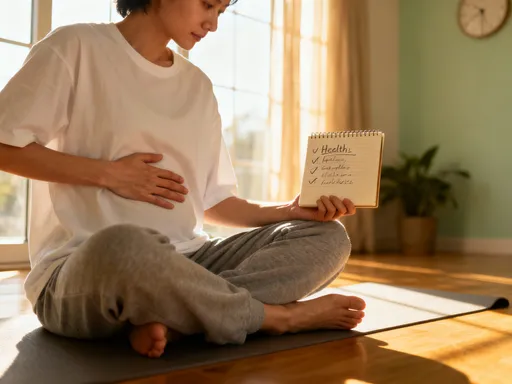
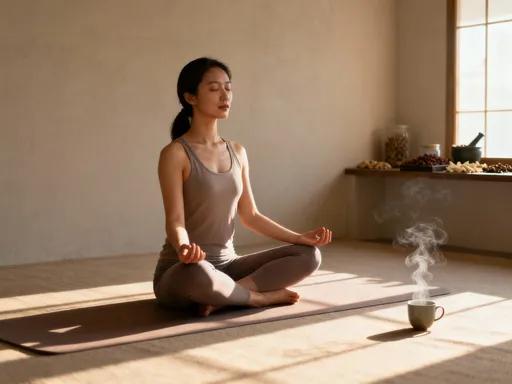
Create a small, inviting space in your home—a corner with a mat, a cushion, or even just enough room to stand. You don’t need to clear the entire living room; a few square feet is enough. Natural light, a plant, or a candle can make the space feel calming, but these are enhancements, not requirements. What matters most is the intention to show up for yourself. If mornings are too rushed, try a short session in the evening to unwind. Some women find it helpful to practice during children’s homework time or after putting the house to bed—a quiet ritual to mark the transition from doing to being.
Flexibility is essential. Some days, you may complete a full 20-minute routine. Others, you may only manage five conscious breaths while waiting for the oven to preheat. Both are valid. The goal is not to achieve a perfect form, but to cultivate awareness. Over time, this awareness extends beyond the practice itself. You may find yourself pausing more often—feeling your feet on the ground while standing in line, noticing your breath during a conversation, or choosing to stretch instead of scrolling. These small moments become threads of stillness woven into the fabric of daily life.
Beyond the Mat: Shifting Your Whole Health Mindset
Qi gong is more than a physical practice—it is a philosophy of listening. Over time, it fosters a deeper relationship with the self. Women who practice regularly often report changes that extend far beyond energy levels. They begin to eat more mindfully, noticing when they are truly hungry versus eating out of habit or stress. They become more attuned to emotional patterns, recognizing when fatigue or irritability is a signal to rest, not push harder. They start to value rest not as laziness, but as a necessary component of strength.
This shift in mindset is profound. In a culture that equates worth with output, choosing stillness is an act of quiet rebellion. Qi gong teaches that healing doesn’t always come from doing more—it often comes from allowing. It invites a return to the body’s innate wisdom, the quiet voice that knows when to move, when to rest, and when to simply be. This is not passive acceptance, but active care. It is the understanding that true well-being is not a destination, but a daily practice of alignment.
For women in the midst of life’s busiest chapters, qi gong offers a way to reclaim energy without burnout, to stay engaged without depletion. It is not a cure-all, but a companion—a gentle, consistent presence that supports resilience, clarity, and peace. The transformation is not loud or sudden, but deep and enduring. It is felt in the calm before the storm of the day, in the breath that steadies a racing heart, in the quiet confidence of knowing you are listening to yourself again. In a world that never stops asking for more, qi gong reminds us that sometimes, the most powerful thing we can do is breathe into stillness—and let that be enough.